Making space for something new.
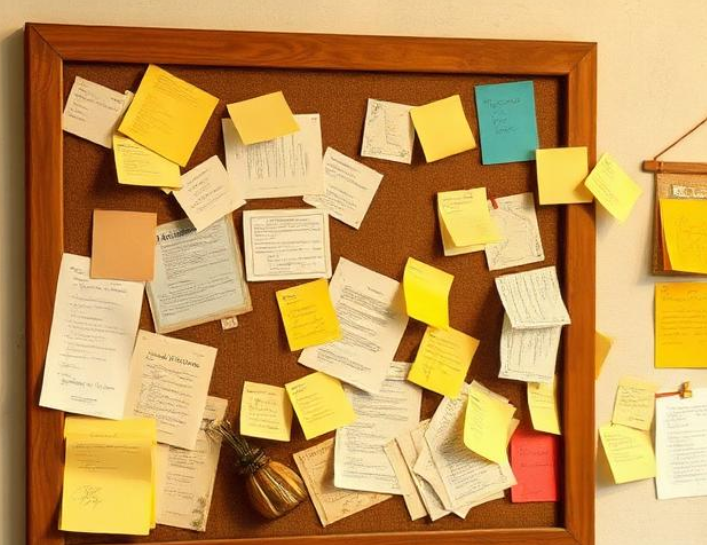
A few years ago I was looking at a canvas on my wall and thought that it would look much better with a frame. I love woodworking, and it seemed like a fun weekend project. I staged the tools and cut the wood, but when I tried putting it together I realized that a slight bend in the wood stopped the pieces from lining up. I needed to go back and get more wood, then update the plans to account for any bend.
So, obviously, I completely abandoned the project. I realized that I needed to buy an expensive planar saw to fix the bend in the wood, and I accepted that I was not going to get a decent-looking frame for the effort that I was willing to expend on it. I gave up, I went and did something different, and the wood is still sitting in my basement. I had other tasks on my To-Do list, and I wanted to focus on those things first.
However, every time I walk past that canvas I think about how it needs a frame. Every time I see the wood in the basement I’m brought back to the moment where I realized that it wasn’t going to work. I feel it unconsciously added to my to-do list, and I have to consciously dismiss it.
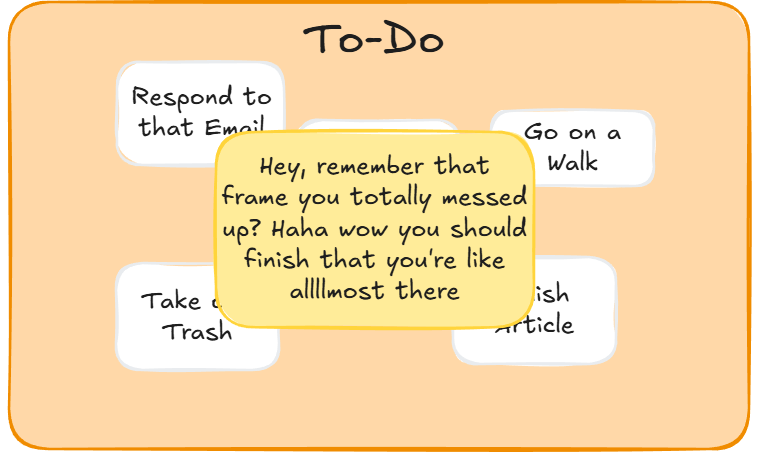
There is something that lurks in the shadow of these unfinished tasks.
It That Remains
We abandoned a small mental trigger – a “problem”, something unsettled, that we keeps invading our headspace until it feels resolved. Realistically I should spend my time either throwing out the wood or buying a frame instead of writing an ode to it, yet here I am. In our bulletin-board-headspace, these tasks feel boated because of the emotional investment that we already have with them. Once we decide what to do with it, it becomes smaller.
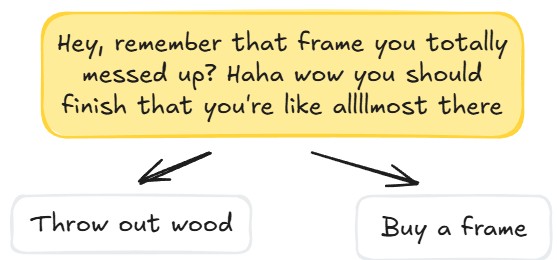
These two choices still have weight. There are consequences either way, but once we accept the ramifications of our decisions we get to move on with our lives. The etymology of the word decide means “to cut off” all other options. Nothing else remains. Making choices lets us create space and reclaim dominion over our headspace.
Using that new space on the board to organize our thoughts, we can start to sort the activities into categories and eventually see a throughline of events to knock out everything on our list for the day.
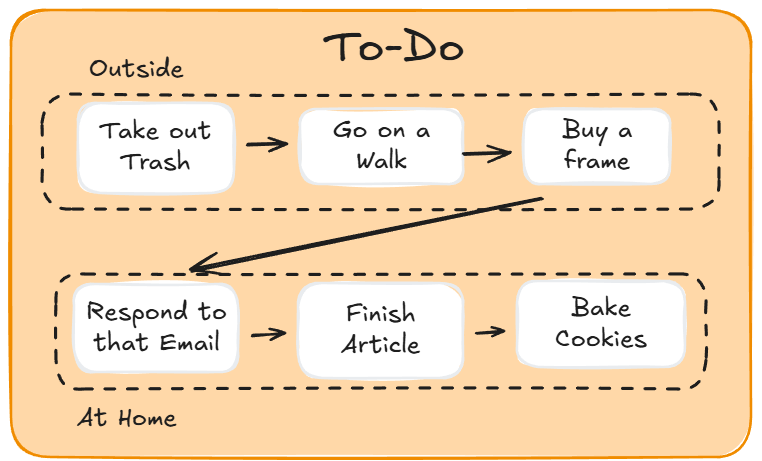
Ending the day with a clean board feels incredible. But life is rarely that generous.
There are tasks that are never “finished”. Every day we gift ourselves dishes that we need to clean. Laundry, plants, pets, and recurring weekly tasks fill up our schedule. To prevent us from becoming chore drones we can move some of them into a future headspace, but something from them gets left behind.
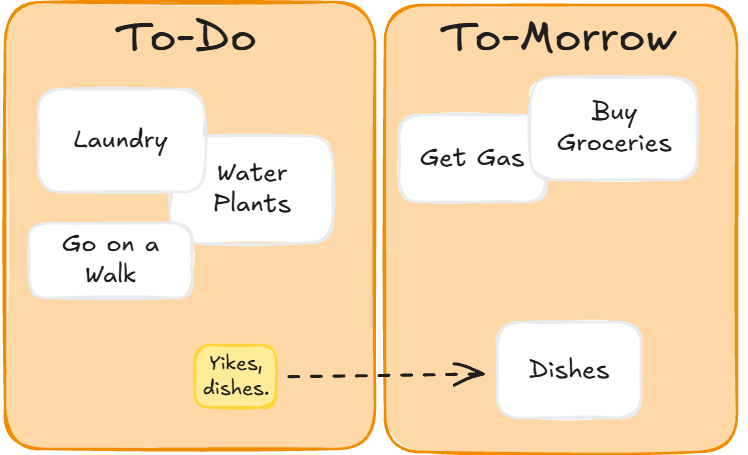
The feeling is still on our To-Do list – we’re just moving the work to tomorrow so that we can fit in something else today. Prioritization is key! And we’re going to do it tomorrow, right? Right? Because if we don’t it’ll start to take up more and more space, until it becomes so big that we can’t even process it. And we would never let that happen…
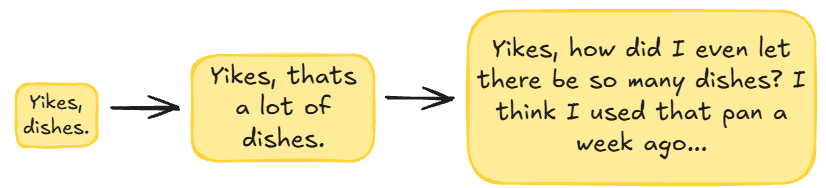
Eventually it starts to become so overwhelming that other tasks get buried beneath it and forgotten about. At some point, the board can start to look like this:
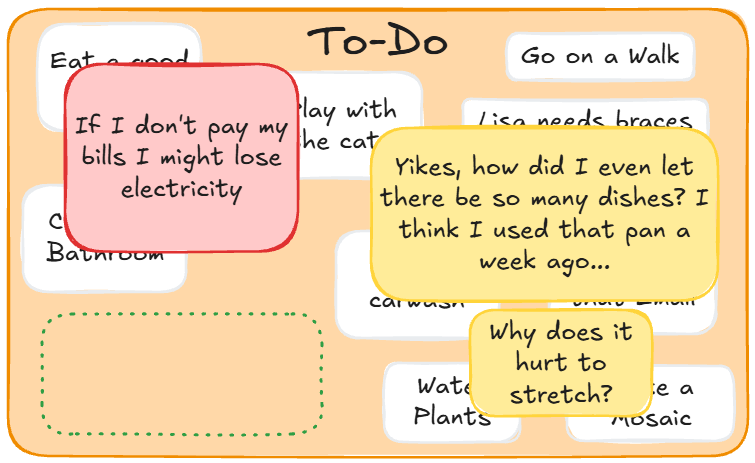
There is so much going on here that the whole board starts to become blurry. The tasks are fed by inattention and keep growing to fill the space that they are given. If we allow them to fester for too long, we end up with only a tiny space to fit our basic needs. Forget about goals and desires – we need food and sleep, and sleep is easier to compromise on. This is no way to live.
Out of Focus
Something prevents us from facing these problems head-on. We get stuck because there is something that is part of this aberrant task that we can’t comprehend. While we think of our To-Do list as activities, the things that we’re facing here are actually feelings. If we try to decompose that task for the pile of dishes into smaller chunks of work, all there is to do is… the dishes. It’s not complicated, but the feelings that are present make it seem like it is:
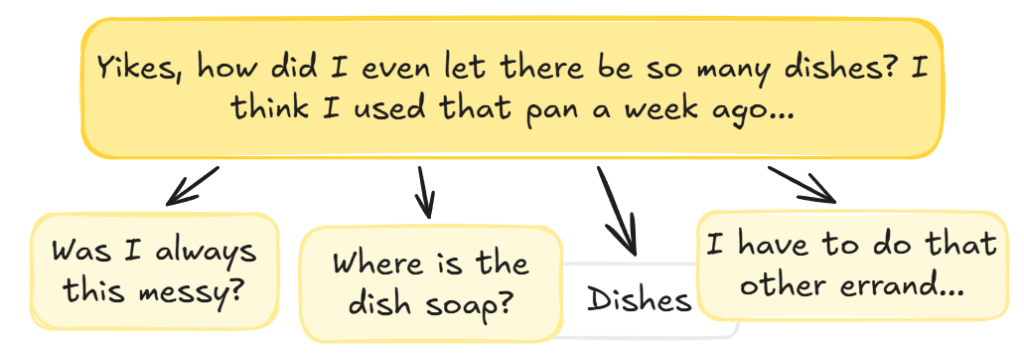
We could simply do the dishes! Perhaps we’ll find the soap too. But if we don’t address these other feelings that are part of this task, then we’ll trick ourselves into thinking that it’s done and banish the leftover work to a corner of our board. Then, the next time dishes pile up, that feeling will return, bolstered by all of the times we’ve ignored it. Each of these emotional tasks need to get completed too.
They demand different skills than physical tasks; self-reflection, decisiveness, and most importantly: focus. When we think about that huge pile of dishes, the mind starts to wander to other things. Getting a sweet treat. Scrolling on Instagram. Shopping for some junk that we don’t need. Things that are easier to process than that quagmire of emotions. Because some days we just don’t have enough energy left to process things that big.
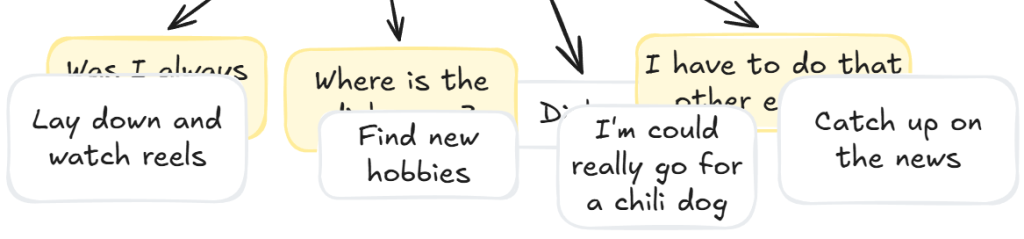
Our focus gets spent on infinitely scrolling loops that can never be closed. Before we know it, we’ve wasted all of our decision-making energy on things that don’t matter instead of on the problems in our life that are dominating our headspace. Every day becomes the same loop. We prioritize unimportant tasks because they’re small and manageable. The big tasks keep getting bigger. Rinse and repeat. The only way to fight back is to close the loop.
Loop Back Around
The solution to a spiral is to decide to turn it into a circle. Give it a definitive endpoint. Focus on completing the task.
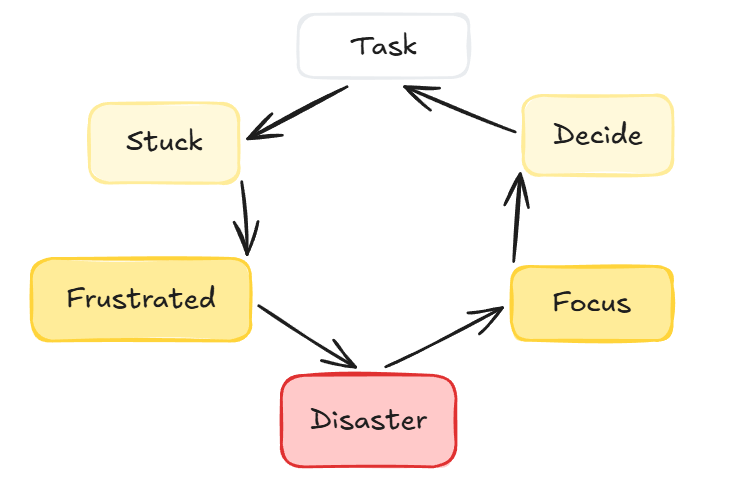
When you’re on the verge of (or in the middle of) disaster, that means its time to dismiss every distraction and focus entirely on the problem. There will be things that you want to do that you’ll need to set aside. Remember that you’re prioritizing protecting your focus. Use whatever space you have to work through your frustrations and process the emotions that keep the task blurry.
Once those emotions have been acknowledged, processed, and feel complete, you can finally decide how to finish the task. It might be as simple as acknowledging that you’ve let your stress take over your house and you need to clean up. You aren’t a messy person, and the shame you feel isn’t valid. You’ve deprioritized cleaning, and it’s time to re-prioritize it. Do the dishes.
Perhaps you let the wood sit in the basement because you wish you were a better woodworker. There are a lot of smaller projects you should try instead before you tackle something this complicated. You’re not bad, you’re just inexperienced. You’ve been busy doing the dishes lately. Donate the wood to a friend.
Practice mindfulness and be aware of how you spend your time. You’ll be surprised how much you can accomplish with a fresh morning, a clean board, and an idea.
Leave a Reply